The day itself, stop by stop
DMZ day tour: what to expect, stop by stop
What a DMZ day tour from Seoul involves: the stops in order, how long the day runs, the tunnel walk, what to bring and who it suits.
Check dates and availability ↗Quick answer
Expect a long day: the booking runs 5 to 9.5 hours, with about an hour on the bus each way. The stops it names are Imjingak, Freedom Bridge, the 3rd Tunnel, Dora Observatory and Unification Village. Bring your original passport and shoes for the steep tunnel walk. Photography may be restricted in places, and any stop can change or close on the day.
The day in order
The itinerary starts with about an hour on the bus, then Imjingak for about an hour and Freedom Bridge for about 30 minutes. The 3rd Tunnel takes about 40 minutes, Dora Observatory about an hour, and Unification Village about 30 minutes, followed by about an hour back to Seoul. The suspension bridge option adds about 45 minutes. These are guide figures only, and the booking states that itineraries are subject to change, so your guide sets the real pace on the day.
Imjingak and Freedom Bridge
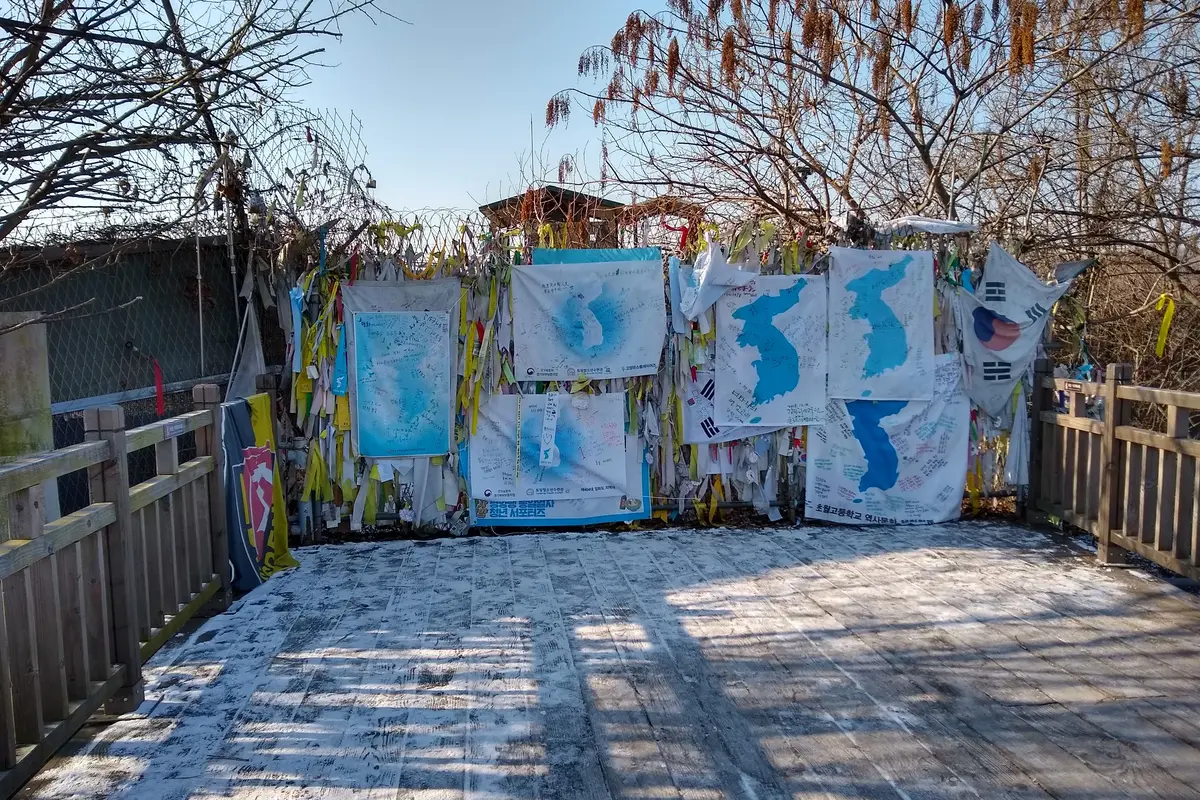
Imjingak is a park on the Imjin River, built in 1972. Visitors can reach it without going through a security checkpoint, and VisitKorea lists it as open all year. It sits about 7 km from the Military Demarcation Line. Freedom Bridge is named after the more than 12,000 prisoners of war who returned south over it in 1953. Nearby, the Mangbaedan altar lets people with family in the North pay their respects, especially at New Year and Chuseok. A rusted, bullet-scarred steam locomotive from the war also stands in the park.
The 3rd Tunnel
Of the four tunnels South Korea has found under the DMZ, this is the one closest to Seoul. It was discovered in 1978 after a tip from a North Korean defector and runs about 1.6 km, roughly 73 m below ground and about 52 km from Seoul. South Korea's tourist board says it was built to invade the South, while North Korea has said tunnels like it were for coal mining. Visitors go down a sloped access shaft. VisitKorea lists a monorail and an on-foot option, and the booking warns that the walk is steep uphill and downhill. It does not say which applies, so plan for the walk.
Dora Observatory
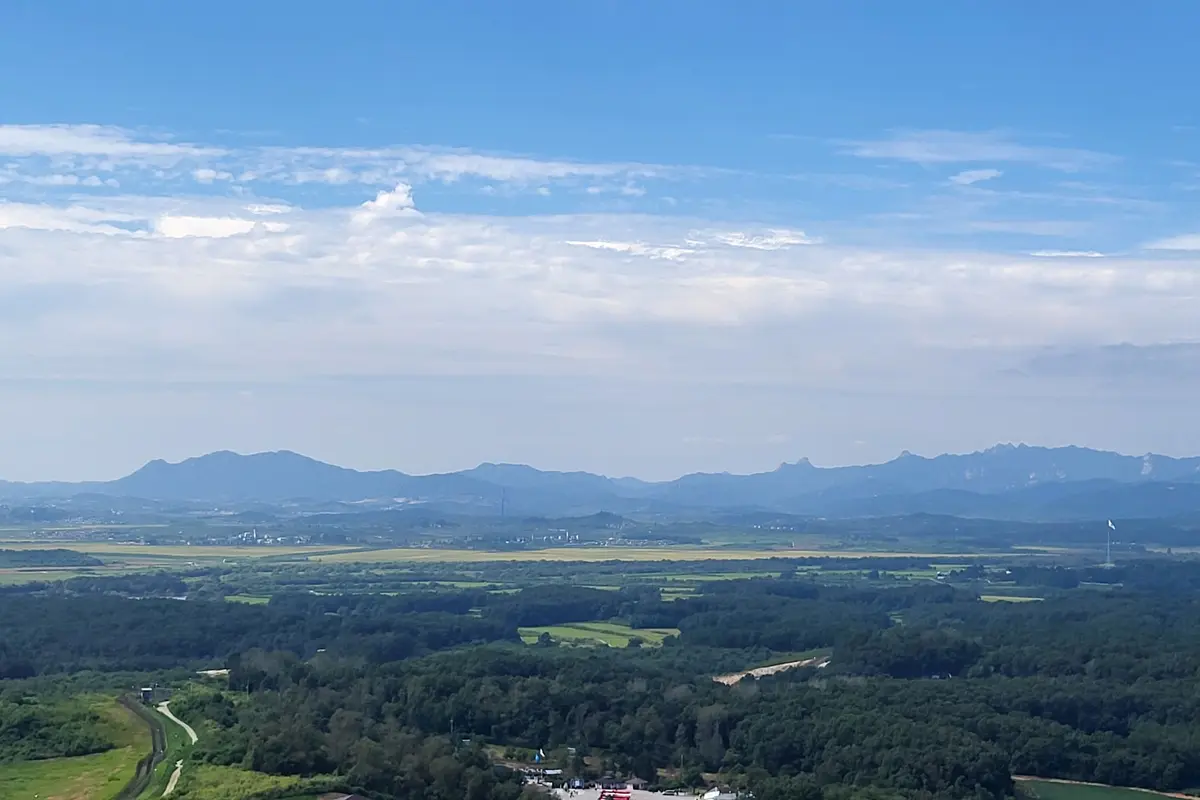
Dora Observatory is the closest DMZ observatory to Panmunjom. From it, VisitKorea says you can see Panmunjom, Daeseong-dong (a South Korean village inside the zone), the mountains and farmland on the North Korean side, and the city of Gaeseong, the historic capital of Goryeo. Binoculars are available. A new three-storey building opened in 2024, with an indoor amphitheatre, a cafe and toilets, and the old building is no longer open to tour groups. Individual visits are not allowed, and VisitKorea lists the observatory as closed on Mondays.
Unification Village and the optional stops
Unification Village sits north of the Civilian Control Line in Paju. VisitKorea says it is known for farm produce such as Jangdan ginseng, soybeans and rice. The two options go further. The museum option adds the North Korea Human Rights Center and its exhibition Myungju's Room, limited to 20 guests a day. The suspension bridge option adds the Gamaksan bridge for an extra fee. Neither is part of the standard tour, so choose one only if it fits your day.
Read next: DMZ tour from Seoul: which option to book
Getting there and back
Pickup depends on the option you choose. Some options include hotel pick-up from centrally located Seoul hotels, and the booking mentions two drop-off locations, but hotel drop-off is not included. Arrive at the meeting point at least 10 minutes before departure, because the bus cannot wait for late arrivals if it is to keep to the military schedule. Imjingak is about 56 km from Seoul City Hall, and the itinerary allows about an hour of bus time each way. Your confirmation shows the start time. If you would rather go on your own, VisitKorea says Imjingak is reachable by subway from Seoul, but the tunnel and the observatory need a reserved tour.
What to bring and wear
Bring your original, valid passport; every participant needs one. The booking says no specific dress code is required, but photography may be restricted in designated areas, so follow your guide's instructions on where cameras are allowed. Wear shoes you can walk in, since the slope at the 3rd Tunnel is steep. Food and drinks are not included, so bring water or buy something yourself. VisitKorea also says photography at the DMZ is highly restricted, so check before you raise a camera. Keep your passport on you, not in a bag you leave on the bus.
Guides, language and group size
The guide is live and works in English, Japanese or Chinese, and you choose the language when you book. The booking also lists private and small-group formats, so check the calendar to see what your date offers. The transfer is shared, so you travel with other guests. Sites on the route are run by different bodies, and the rules at each can differ, so your guide's instructions on the day take precedence over anything printed here.
Children, mobility and health
Every traveller needs a passport, and unaccompanied minors are not allowed. The booking lists wheelchair users and people with heart problems as not suitable. The tunnel descent is steep both ways and may be hard for older visitors or anyone with mobility or health concerns. VisitKorea notes that Panmunjom does not admit visitors aged 7 and under, but that applies to the JSA, which this tour does not include. The booking states no minimum age for the stops it names.
When to go
No source we checked names a best season for the DMZ sites, and VisitKorea's DMZ guide gives none, so we don't either. The day of the week matters more. VisitKorea lists the 3rd Tunnel and Dora Observatory as closed on Mondays, and the tunnel as closed on weekday public holidays, Seollal and Chuseok. Tours can also be cancelled at short notice for security reasons. Imjingak, outside the line, is listed as open all year. Pick a date with a spare day around it, and check the booking calendar to see what runs.
Who this isn't for
If you want a relaxed sightseeing day, this is a lot of bus time: about two hours of it in the itinerary. If you need a guaranteed view into North Korea, remember that stops can close and visibility varies by day. If you cannot manage a steep walk, the tunnel is the hard part, and the booking lists wheelchair users as not suitable. If you want to linger at every stop, the itinerary gives 30 minutes to an hour at each. If you hoped to stand inside the JSA, it is not on this tour.
Frequently asked questions
How long is a DMZ day tour from Seoul?
The booking lists 5 to 9.5 hours depending on the option, and the itinerary allows about an hour of bus time each way. The booking calendar and your confirmation show the start time for your date.
Is there a dress code on the DMZ tour?
The booking says no specific dress code is required. Photography may be restricted in designated areas, so follow your guide's instructions. Wear shoes you can walk in, because the 3rd Tunnel walk is steep.
Is the 3rd Tunnel hard to walk?
It can be. The booking describes the walk as steep uphill and downhill and says it may be challenging for elderly visitors or anyone with mobility or health concerns. Wheelchair users and people with heart problems are listed as not suitable for the tour.
Can children go on the DMZ tour?
Yes, if they have their own original, valid passport and an adult with them: unaccompanied minors are not allowed. The booking states no minimum age. The steep tunnel walk and the length of the day are the main things to weigh.
What can you see from Dora Observatory?
VisitKorea says you can see Panmunjom, Daeseong-dong, the mountains and farmland on the North Korean side, and the city of Gaeseong. Binoculars are available. Individual visits are not allowed, and the observatory is listed as closed on Mondays.
Which languages do the guides speak?
The live guide works in English, Japanese or Chinese. The booking also lists private and small-group formats, so check the calendar to see what is offered for your date.
Sources